
The Lok Sabha has approved an amendment to the Transgender Persons (Protection of Rights) Act, sparking debate over its impact on LGBTQ rights and the definition of 'transgender' in Indian law.

Tamil Nadu Chief Minister M K Stalin celebrated the defeat of the Constitution Amendment Bill in the Lok Sabha, emphasising the unity of the south and the triumph of democracy. The bill aimed to implement reservation for women in legislatures in 2029 and increase Lok Sabha seats. Stalin criticised the bill as weakening the balance of the union and asserted Tamil Nadu's commitment to justice, dignity, and federalism.

According to a bulletin issued on Wednesday, 'The Constitution (One Hundred and Thirty-First Amendment) Bill, 2026', 'The Delimitation Bill, 2026' and 'The Union Territories Laws (Amendment Bill), 2026' will be introduced and debated for passage in the Lower House.
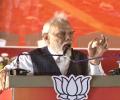
West Bengal Chief Minister Mamata Banerjee has accused the BJP-led central government of using the proposed amendment to the women's quota law as a front for the Delimitation Bill, which she claims will divide the country. She asserted that her party, the TMC, will fight this move at every step.

The Lok Sabha is set to expand to 815 seats, with 272 seats reserved for women, according to Union Law Minister Arjun Ram Meghwal. The move aims to implement the women's quota without disadvantaging men or any state. The proposed legislations also include provisions for reservation for women from SC and ST categories within the women's quota.

NDA floor leaders held a meeting after the Constitution Amendment Bill seeking to implement reservation for women in legislatures in 2029 and increase the number of seats of the Lok Sabha was defeated.

The ruling NDA coalition in India faces a significant challenge in passing the women's reservation bill in Parliament due to insufficient numbers. The bill requires a two-thirds majority in both houses, and the NDA needs to secure additional support or abstentions from other parties to achieve this.

The government has released a set of FAQs to address concerns and clarify the details surrounding the Women's Reservation Bill, which aims to provide 33 per cent quota for women in legislatures.

A Constitution Amendment Bill aimed at implementing 33 per cent reservation for women in legislatures and increasing Lok Sabha seats was defeated in Parliament, marking a setback for the government's efforts to empower women in politics.

Union Home Minister Amit Shah criticises the Congress and its allies for the defeat of the Constitution amendment bill aimed at implementing 33 per cent women's quota in legislative bodies before the 2029 Parliamentary polls.

Lok Sabha Speaker Om Birla announced that voting on three crucial bills, including amendments to the women's quota law and the establishment of a delimitation commission, will take place at 4 PM on Friday, following an anticipated 15-18 hour debate.
West Bengal Chief Minister Mamata Banerjee announced that the TMC will support the women's quota bill but opposes the delimitation bill introduced by the Modi government in the Lok Sabha. She also criticised the central government over central agency raids on TMC candidates.

NDA leaders have defended proposed amendments to the Women's Reservation Act and the Delimitation Bill, 2026, arguing women have waited long enough for reservation, while opposition parties allege the process could undermine India's federal and democratic structure, particularly impacting southern states.

In a swift political counter-offensive, the Bharatiya Janata Party and its National Democratic Alliance (NDA) partners have announced a massive, nationwide protest campaign targeting the Opposition.

West Bengal Chief Minister Mamata Banerjee criticised the BJP after the central government failed to pass a Constitution amendment bill for women's quota in legislatures, accusing the BJP of using the bill as a political ploy to divide the country and Bengal.

Rahul Gandhi playfully remarked on his and PM Modi's lack of 'the wife issue' during a Lok Sabha debate, highlighting the influence of women in everyone's lives.

Rahul Gandhi accuses the government of using the women's reservation bill as a smokescreen to manipulate India's electoral map and diminish representation for certain states.

Tamil Nadu Chief Minister M K Stalin has claimed victory for the state after the Constitution Amendment Bill was defeated in the Lok Sabha. Stalin criticised the Centre's handling of the Women's Reservation Bill and delimitation process, accusing the BJP of prioritising political gain over fairness and consultation.

The BJP and the Opposition have engaged in a war of words over the implementation of the women's reservation bill, which aims to reserve seats for women in legislatures. The bill was defeated in the Lower House, leading to accusations and counter-accusations between the parties.

BJP president Nitin Nabin has accused West Bengal Chief Minister Mamata Banerjee and opposition parties like the Congress for the setback in implementing women's reservation in legislatures.

The Indian Parliament is expected to extend its budget session to introduce a bill increasing Lok Sabha seats to 816, reserving 273 for women, and amending the women's reservation law.

With the three-day special sitting of Parliament on the constitution amendment bill related to the implementation of 33 percent reservation for women from the 2029 Lok Sabha polls set to begin on Thursday, a meeting of opposition parties is slated to be held on Wednesday at the residence of Congress president Mallikarjun Kharge.

The Indian government has introduced the Jan Vishwas (Amendment of Provisions) Bill, 2026, in the Lok Sabha to decriminalise and rationalise minor offences, aiming to promote ease of doing business and living.
The government has introduced a bill in the Lok Sabha to amend provisions for decriminalising minor offences, aiming to promote ease of doing business and living.

'The reason why they rushed through the bill was they wanted to avoid using the 2026 Census because the 2026 Census by their own decision will be a caste census.' 'The BJP knows that a significant share of the OBCs who will get captured in the census, for the first time after the 1931 Census, are against the BJP. Only a segment of the OBCs are in their favour.' 'So they wanted to avoid the OBC reservation among women, which is a demand of a lot of Opposition parties.'

Prime Minister Narendra Modi has accused opposition parties of obstructing the passage of the women's reservation bill in Parliament, alleging they have crushed the dreams of women and prioritised selfish politics over national progress.

The Lok Sabha has passed a bill recognising Amaravati as the sole and permanent capital of Andhra Pradesh, solidifying the city's status after years of debate and uncertainty. The bill aims to prevent future changes to the capital and received support from both the ruling NDA and the opposition Congress, while the YSR Congress Party opposed the bill.

The Indian Parliament has passed a bill amending the Transgender Persons (Protection of Rights) Act 2019, focusing on biological discrimination and excluding social orientations from its scope. The bill aims to provide legal recognition and protection to transgender individuals facing discrimination due to biological issues, while also introducing graded punishments for harm inflicted on them.

The Congress party has directed its MPs to attend Parliament and protest against the FCRA Amendment Bill, describing it as unconstitutional and a threat to minority organisations. The government asserts the bill aims to enhance transparency and prevent misuse of foreign funds.

Trinamool Congress MP Nadimul Haque criticised the Jan Vishwas (Amendment and Provisions) Bill, 2026, in the Rajya Sabha, questioning the government's approach to amending multiple central laws through a single piece of legislation and raising concerns about its impact on public health and federal funds owed to West Bengal.

Prime Minister Narendra Modi will address the nation tonight at 8.30 PM, a day after a bill to implement women's reservation in legislatures was defeated in the Lok Sabha.

Prime Minister Narendra Modi appealed to Lok Sabha members to vote for the women's reservation bill, emphasising the need to empower women and rectify decades of political inaction.

Prime Minister Narendra Modi announced that Parliament is on the verge of creating 'new history' by amending the Women's Reservation Act this week, ensuring its implementation by 2029. He highlighted the unanimous passage of the law in 2023 and the collective demand for its early enforcement.

The Lok Sabha rejected a resolution seeking the removal of Om Birla as Speaker by a voice vote amidst opposition protests and demands for an apology from Home Minister Amit Shah.

A bill to implement 33 per cent reservation for women in Lok Sabha and state assemblies by increasing the lower house's strength to 850 is slated for introduction in Parliament. The bill seeks to amend Article 81 of the Constitution and utilise 2011 Census data for redrawing constituencies.

Union Home Minister Amit Shah has announced a significant increase in Lok Sabha seats for the five southern states following delimitation, countering misinformation and clarifying the timeline for women's reservation implementation.
NCP (SP) leader Anish Gawande has urged the government to withdraw the Transgender Persons Amendment Bill, 2026, arguing that it undermines the right to self-determination of gender identity and was drafted without adequate consultation.

'You cannot run Parliament with 800 MPs as nobody will get time (to speak in Parliament). And Parliament sits for barely 60 days in a year.' 'Look at the House of Commons of the United Kingdom. They have 650 MPs and they sit for 150 days on an average in a year.'
Opposition MPs and transgender rights activists are urging the withdrawal of the Transgender Persons (Protection of Rights) Amendment Bill, 2026, citing concerns that the proposed changes could weaken the rights of transgender individuals.
Opposition MPs and transgender rights activists are calling for the withdrawal of the Transgender Persons (Protection of Rights) Amendment Bill, 2026, citing concerns that the proposed changes could dilute the rights of transgender individuals.
 © 2026 Rediff.com - Advertise with us - Disclaimer - Privacy Policy - Sitemap - Feedback - About us - Terms of use - Grievances